

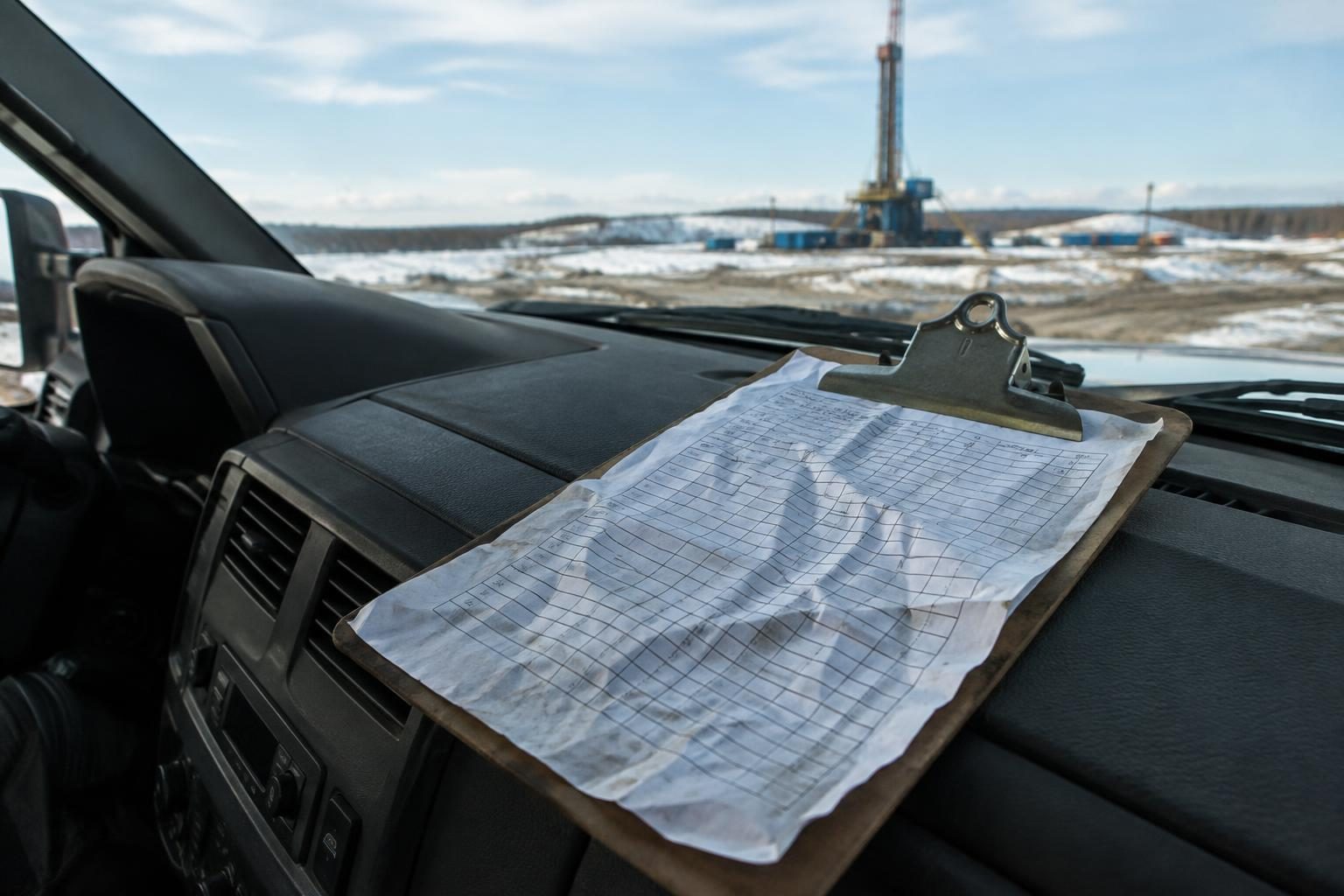
The daily round is still the best source of truth about a lease. The pumper sees the tank level, hears the compressor and writes it down. What happens to that note decides whether it is worth anything a month later. Paper sheets get retyped in the evening, photographed at an angle, left in a truck or misread by whoever opens the file. Putting the same round on a tablet is the easy part. Making the result usable when someone asks questions is the harder one.
Most teams that look into oil and gas field data collection software start with a simple complaint: the same reading is typed twice, and the two copies do not always agree. That is a good place to start, because it points at the real requirement. The reading should be captured once, at the wellhead, and everything else should be a view of it.
Why the record matters more than the form
Alberta’s measurement rules put weight on what operators can show afterwards. The Alberta Energy Regulator’s Directive 017, Measurement Requirements for Oil and Gas Operations, covers what data must be kept for audit purposes. The current edition took effect on September 28, 2026. The directive sets out the requirements; your own system has to make them easy to meet on an ordinary Tuesday, not only in the week before an audit.
The same readings often feed other reporting too. Facility emissions and releases are reported through programs such as the federal National Pollutant Release Inventory, and production volumes flow through Petrinex. A wrong number captured in the field can travel a long way before anyone notices it.
What a good field form does
- Works with no signal. Many leases have none. Entries are saved on the device and sent when coverage returns, with the original time of entry kept.
- Refuses obvious errors. A required field left empty, a pressure outside a plausible range or a missing signature should stop the submission in the field, not in the office three days later.
- Keeps history. A submitted report is never quietly overwritten. A correction is a new entry that points back to the old one, with a reason.
- Feeds the rest. A reading entered once is available to measurement, emissions and maintenance work without retyping.
Questions to ask before you buy
Buyers often compare screens. The better comparison is behaviour at the edges. Ask how the system treats a technician who loses signal for six hours, how a supervisor sees what has been submitted so far today, and how an auditor could export every round for one facility across a full year. A tool built around those three cases is usually built well everywhere else.
Also ask what happens at the end of a project. Commissioning checklists and job binders are where paper survives longest, and they are exactly the documents people hunt for when a facility changes hands. If the same platform holds both the daily rounds and the handover package, the history of a site stays in one place.
Adoption is a people problem
The most common failure is a form that copies the old paper sheet field for field, including the boxes nobody ever filled in. Start with the five things a pumper actually checks every day. Add more only when someone asks for them, and let the crew help name the fields, because they are the ones who will tap through the form in the cold with gloves on.
Keep the paper method running for a short overlap period and compare the two sets of records. If the digital version catches things the paper missed, the case for the change makes itself. If it does not, you have learned that cheaply, and the form can be adjusted before it reaches every route.
A simple test for your own records
Pick one facility and one date from last quarter. Try to find the original reading, who entered it, whether it was changed and why, in under ten minutes. If that is easy, the process is sound. If it takes an afternoon of phone calls and spreadsheets, that is where to start improving, whatever tool you end up choosing.